Egypt, Tailored for You.
Embark on our inaugural grand journeys
Every Egypttoura journey that includes Luxor and Upper Egypt, from private day tours to multi-day journeys and Nile cruises that continue to Aswan, Cairo and beyond. Your own Egyptologist guide and driver, and a pace that is entirely yours.
expand your territory
25 years of expertise, tailored into your perfect journey.
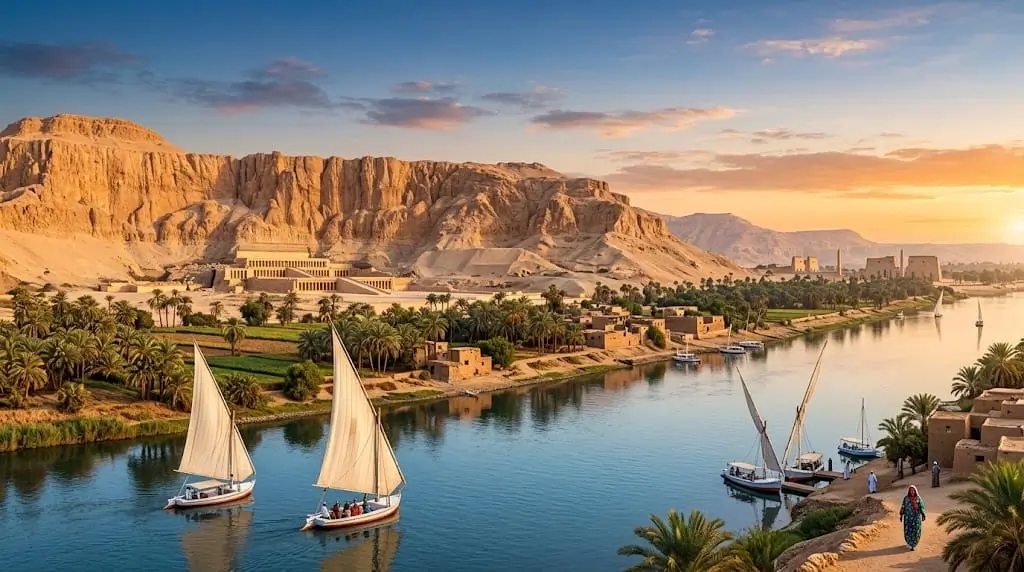
Step directly into the greatest open-air museum on earth. Luxor and Upper Egypt hold an astonishing concentration of monumental history. You can walk through colossal temple halls built by the most famous pharaohs. Afterward, you can cross the timeless Nile River to uncover brilliantly painted tombs hidden in the desert mountains. This specific region perfectly preserves the absolute peak of ancient Egyptian imperial power. Every single stone tells a captivating story of triumph, divine worship, and eternity. Review our dynamic tour collections below to begin your journey into the ancient past.
Luxor represents the absolute beating heart of ancient Egyptian civilization. It sits majestically on the fertile banks of the Nile River in the center of the country. Consequently, the city boasts an unparalleled concentration of magnificent historical monuments. The river neatly divides the region into two distinct geographical and spiritual zones. Therefore, every single day spent in this region offers a completely new perspective on ancient history. This authoritative destination demands your time and deep appreciation for its immense archaeological weight.
We have meticulously crafted diverse itineraries to showcase the absolute best of this legendary region. You can select an immersive day trip to explore the massive temples of the East Bank. Alternatively, you might prefer a comprehensive multi-day expedition covering every hidden tomb in the western mountains. We arrange highly efficient day trips to remote northern monuments for travelers with limited time. Meanwhile, our luxurious Nile River cruises offer a remarkably relaxing pace for those who wish to linger. Every option guarantees an unforgettable encounter with history through our specialized Luxor and Upper Egypt tours.
Modern Luxor stands directly over the ruins of ancient Thebes. This magnificent settlement served as the grand capital of Egypt during the prosperous New Kingdom era. The pharaohs poured unimaginable wealth into the city for over a thousand years. Moreover, they dedicated massive architectural projects to Amun, the supreme king of the Egyptian gods. The desert landscape shaped their grand religious visions and resilient imperial character. Today, their incredibly rich heritage remains vibrantly alive across the entire modern city.
The East Bank of Luxor focuses entirely on life, creation, and divine worship. The magnificent Karnak Temple complex dominates this side of the river completely. Ancient builders constructed and expanded this massive stone sanctuary over two thousand years. Visitors approach the grand entrance through an awe-inspiring avenue of ram-headed sphinxes. The towering stone walls rise dramatically against the bright blue Egyptian sky.
The Great Hypostyle Hall inside Karnak remains an unparalleled marvel of ancient engineering. You will walk through a dense forest of one hundred and thirty-four colossal stone columns. The ancient workers carved deep, intricate hieroglyphs into every single surface. Furthermore, the massive obelisks of Queen Hatshepsut and King Thutmose the First pierce the sky nearby. Consequently, exploring Karnak provides a profound understanding of ancient religious devotion.
Luxor Temple sits beautifully in the very center of the modern downtown area. Amenhotep the Third and Ramses the Great primarily built this remarkably elegant sanctuary. Unlike Karnak, this temple focused specifically on the divine rejuvenation of the ruling pharaoh. The massive front pylons feature two colossal seated statues of Ramses guarding the entrance. Furthermore, a soaring pink granite obelisk stands proudly before the gates.
Visiting Luxor Temple in the evening creates a truly magical historical experience. The government illuminates the entire complex with beautiful, dramatic golden lighting after sunset. Therefore, the deep carvings and massive statues cast striking shadows across the stone courtyards. You can easily imagine the grand ancient festivals that once took place in these very halls. This evening excursion perfectly complements your daytime archaeological adventures.
The West Bank of Luxor served as the sacred realm of the dead. The pharaohs of the New Kingdom abandoned the concept of highly visible pyramids for their burials. Instead, they hid their mummies deep inside the barren limestone mountains of the western desert. This highly secretive royal necropolis became famous worldwide as the Valley of the Kings. The arid desert environment successfully preserved these incredible rock-cut tombs for millennia.
The interior walls of these tombs display incredibly vivid, detailed religious paintings. The ancient artists depicted fascinating scenes from the Book of the Dead to guide the pharaoh to the afterlife. You will see brilliant shades of lapis lazuli blue and rich gold decorating the burial chambers. Furthermore, this valley holds the legendary tomb of the young King Tutankhamun. Descending into these sacred spaces provides our best evidence of ancient Egyptian funerary beliefs.
The mortuary temple of Queen Hatshepsut stands as an absolute masterpiece of ancient architecture. Her visionary architect designed this stunning monument to blend perfectly with the towering limestone cliffs behind it. The temple features three massive terraced courtyards connected by grand central ramps. Consequently, the building looks incredibly modern despite being over three thousand years old.
The vibrant carved reliefs inside the colonnades tell fascinating stories of her reign. You will see vivid depictions of her famous maritime trading expedition to the distant land of Punt. The ancient artists illustrated unfamiliar animals, myrrh trees, and foreign kings in stunning detail. Furthermore, other murals cleverly document her divine birth to legitimize her controversial rule as a female pharaoh. This magnificent temple demands careful exploration during your West Bank tour.
Just south of the main royal necropolis lies the beautiful Valley of the Queens. The ancient Egyptians buried royal wives, young princes, and powerful princesses in this quiet gorge. The tombs here are generally smaller than those of the pharaohs but boast equally stunning artwork. The absolute crown jewel of this entire valley is the magnificent tomb of Queen Nefertari. She was the highly favored Great Royal Wife of Ramses the Great.
The government meticulously restored Nefertari’s tomb to preserve its breathtaking beauty. The vibrant paint looks so incredibly fresh that the artists could have finished it yesterday. The detailed murals show the beautiful queen making offerings to various underworld deities. However, access to this specific tomb requires a special premium ticket to strictly limit daily moisture and foot traffic. We can easily arrange this exclusive entry as part of your premium itinerary.
Two massive stone statues dominate the green agricultural fields of the West Bank. Historians refer to these towering figures as the Colossi of Memnon. They originally guarded the grand entrance to the massive mortuary temple of Pharaoh Amenhotep the Third. Unfortunately, devastating ancient earthquakes and annual floods completely destroyed the temple itself. However, these two silent stone sentinels survived the centuries to greet modern travelers.
The sheer scale of these statues provides a breathtaking visual impact. They tower eighteen meters high and weigh an astonishing seven hundred tons each. Ancient Greek and Roman travelers frequently visited these statues because one of them reportedly “sang” at dawn. This fascinating acoustic phenomenon likely resulted from morning heat expanding the cracked stone. Today, they serve as the perfect photographic introduction to the West Bank.
The magnificent royal tombs required highly skilled artisans to carve and paint them. These elite ancient craftsmen lived with their families in a completely isolated settlement known as Deir el-Medina. Exploring the ruins of this ancient village offers an unparalleled glimpse into daily Egyptian life. You can clearly see the foundations of their modest stone houses and narrow neighborhood streets.
Furthermore, these workers constructed beautifully decorated private tombs for themselves in the nearby cliffs. The artwork in these humble tombs focuses on joyful daily life and family rather than complex royal theology. You will see charming scenes of the artisans farming, fishing, and attending lively banquets. Consequently, visiting this site provides a crucial human perspective to balance the grand imperial monuments.
The West Bank features several other extraordinary mortuary temples belonging to great warrior pharaohs. The Ramesseum served as the grand memorial temple for Ramses the Great. You can view the shattered remains of a colossal granite statue of the king resting in the dirt. This massive fallen monument famously inspired Percy Bysshe Shelley to write his legendary poem Ozymandias.
Further south lies the incredibly well-preserved temple of Medinet Habu. Ramses the Third built this massive complex as a highly fortified religious citadel. The exterior stone walls feature incredibly deep, aggressive carvings detailing his fierce battles against the mysterious Sea Peoples. Moreover, the interior ceilings still display vast sections of their original brilliant blue and gold paint. Many travelers consider this magnificent site to be the most beautiful temple in all of Luxor.
The region of Upper Egypt extends far beyond the immediate city limits of Luxor. Following the Nile River south toward Aswan reveals an incredible collection of later Ptolemaic temples. This specific route served as a vital agricultural and trading corridor for millennia. Consequently, the wealthy agricultural towns along the riverbanks constructed their own massive religious sanctuaries. Exploring these southern monuments provides a fascinating look at the final chapters of ancient Egyptian history.
The Temple of Edfu holds the prestigious title of being the most perfectly preserved temple in Egypt. Ancient builders dedicated this massive sandstone structure to Horus, the powerful falcon-headed god of the sky. Because desert sand completely buried the temple for centuries, the roof remains entirely intact today. Therefore, walking into the dark inner sanctuary feels exactly like stepping back into the ancient world.
The towering front pylon stands completely undamaged and features majestic carvings of the pharaoh smiting his enemies. Furthermore, the interior walls serve as a massive stone library of ancient religious rituals. The detailed hieroglyphs provide modern historians with crucial information about ancient temple operations and daily divine offerings. Two magnificent black granite falcon statues proudly guard the entrance to the main courtyard.
Further south along a scenic bend in the river sits the unique Temple of Kom Ombo. The ancient architects designed this beautiful structure with a completely symmetrical, dual layout. They dedicated the left side of the temple to the falcon god Haroeris. Meanwhile, they dedicated the right side to Sobek, the fierce local crocodile god. Consequently, the temple features two separate entrances, two grand halls, and two distinct inner sanctuaries.
The site also houses a fascinating modern museum dedicated entirely to mummified crocodiles. The ancient priests bred and worshipped thousands of sacred crocodiles in this very region. Furthermore, the back wall of the temple displays an incredible carving of ancient Egyptian medical instruments. You will clearly recognize ancient scalpels, forceps, and dental tools carved beautifully into the stone. This site perfectly combines stunning river views with highly unusual historical artifacts.
We highly recommend traveling north of Luxor to visit two of the most spectacular temples in the country. The magnificent Temple of Hathor at Dendera features the most vibrant, perfectly preserved astronomical ceiling in Egypt. The brilliant blue astrological murals recently underwent massive restoration to remove centuries of black soot. Furthermore, you can climb the ancient stone staircase to the temple roof to see the famous Dendera Zodiac.
Continuing further north brings you to the incredibly sacred ancient city of Abydos. The stunning Temple of Seti the First houses the most exquisite, delicate relief carvings ever produced by Egyptian artists. The ancient Egyptians believed this holy site held the very tomb of Osiris, the god of the underworld. Consequently, a day trip to these northern monuments delivers an incredibly powerful and visually stunning historical experience.
For a truly unforgettable perspective of Luxor, you must take to the sky. We highly recommend booking a sunrise hot air balloon flight directly over the West Bank. The adventure begins in the very early morning hours before the sun crests the horizon. You will float silently upward as the golden morning light suddenly illuminates the massive green river valley.
From the basket, you can easily grasp the stark geographical divide between life and death. You will look down upon the lush green sugarcane fields abruptly meeting the barren, jagged desert mountains. You can clearly see the massive footprint of Hatshepsut’s temple and the sprawling ruins of the Ramesseum from above. This incredibly peaceful aerial journey remains a massive highlight for our travelers.
The culinary landscape of Upper Egypt offers rich, highly traditional flavors that perfectly complement your adventure. The local cuisine relies heavily on fresh agricultural produce grown directly on the banks of the Nile. Chefs frequently prepare hearty tagines filled with tender roasted meats, fresh okra, and rich tomato sauces. They serve these deeply flavorful dishes alongside freshly baked sun-dried bread known locally as aish shamsi.
You must also experience the legendary Upper Egyptian hospitality during your stay. The residents are incredibly proud of their ancient heritage and welcome visitors with genuine warmth. You can enjoy a refreshing glass of cold hibiscus tea or strong dark coffee at a local market cafe. Engaging with the friendly local shopkeepers and artisans provides a deeply personal connection to the modern culture of the region.
Proper preparation ensures a highly comfortable and deeply enjoyable Upper Egyptian expedition. Luxor features a truly extreme desert climate with virtually zero rainfall throughout the year. The summer months bring intense, punishing heat that makes daytime exploration highly exhausting. Therefore, the absolute best time to visit spans from October through April. The winter months offer brilliant sunshine, clear blue skies, and perfectly comfortable walking temperatures.
You should pack lightweight, highly breathable cotton clothing for your daytime temple excursions. However, the desert temperatures can drop surprisingly low immediately after the sun sets. Consequently, you must bring a warm jacket or sweater for evening temple visits and early morning balloon rides. Finally, highly comfortable walking shoes remain essential for navigating the uneven stone floors of the monuments.
We deliberately design every single itinerary to offer a seamless, authoritative, and deeply enriching experience. Our expert local Egyptologists understand the hidden historical nuances behind every single temple wall and tomb painting. Furthermore, we professionally handle all the complex logistical details strictly on your behalf. You will never have to worry about coordinating private transport, purchasing complex entry tickets, or navigating the crowds.
We prioritize authentic local interactions and highly comfortable travel at all times. Whether you take a rapid day trip to the West Bank or spend a full week exploring the entire region, we ensure your journey is flawless. Our deep, established connections in the local community allow us to offer truly premium, exclusive cultural experiences. Book your adventure today and uncover the timeless, powerful magic of Upper Egypt.